Hand-Drawn Doodle Icons: Why Diverse, Expressive Visuals Are Transforming Modern Design
Imagine opening a wellness app and seeing a cheerful, slightly wobbly sketch of a heart with a tiny leaf sprouting from it—no sterile vector lines, no rigid symmetry—just warmth, humanity, and quiet intention. That’s the power of hand-drawn doodle icons. More than just decorative flourishes, these intentionally imperfect, diverse visual elements are reshaping how we communicate in digital interfaces, infographics, presentations, and brand storytelling.
What Exactly Are Hand-Drawn Doodle Icons?
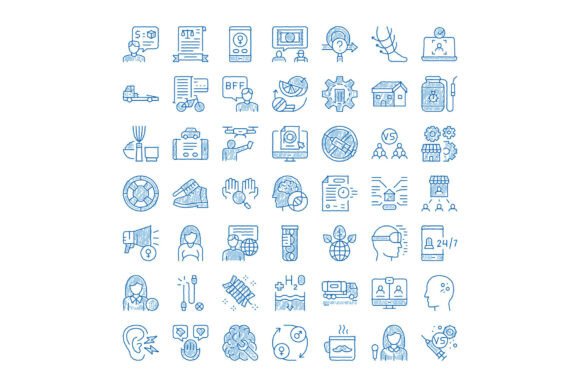
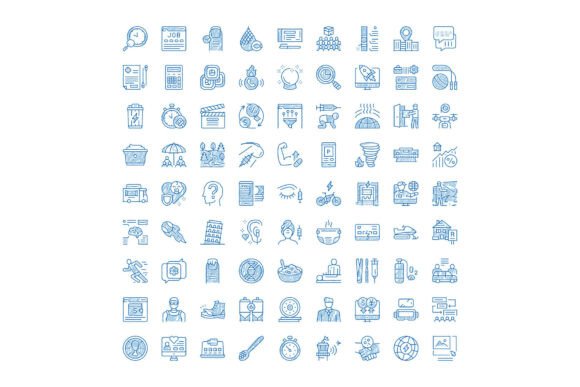
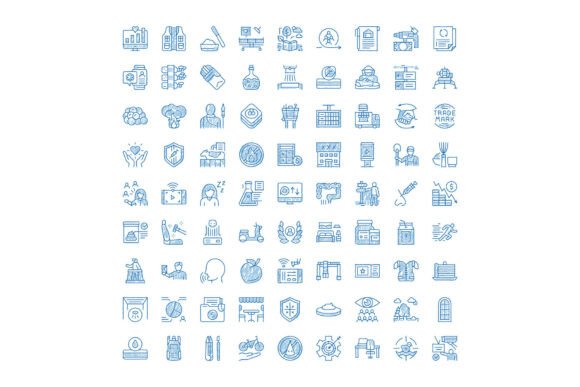
Hand-drawn doodle icons are stylized, non-photorealistic illustrations—typically created digitally to mimic pencil, ink, or marker strokes—that represent concepts across business, healthcare, technology, lifestyle, education, and more. Unlike minimalist flat icons or hyper-realistic SVGs, they embrace visible human gesture: slight line variations, uneven curves, subtle texture, and expressive imperfection.
A “diverse set” means more than stylistic variety—it reflects real-world inclusivity: icons showing people of varied ethnicities, abilities, ages, and gender expressions; symbols representing sustainable energy alongside cloud computing; medical icons that depict mental health support *alongside* physical therapy—not as an afterthought, but as equal, integrated parts of care.
Why “Doodle” Doesn’t Mean “Casual” or “Unprofessional”
There’s a common misconception that hand-drawn equals “unpolished” or “amateur.” In truth, intentional doodle aesthetics require deep design discipline. Each stroke is purposeful—designed to convey approachability without sacrificing clarity, to signal empathy without undermining authority. Think of Apple’s early marketing sketches or IDEO’s human-centered design process: roughness isn’t laziness—it’s invitation. It says, “This idea is alive. You’re part of shaping it.”
The Practical Power Behind the Playfulness
These icons aren’t just charming—they solve real communication challenges in high-stakes environments:
- In healthcare dashboards, a soft, hand-sketched icon of a person meditating beside a brain helps normalize mental wellness metrics—reducing stigma while improving user engagement with sensitive data.
- In SaaS onboarding flows, a friendly doodle of a gear turning *with* a lightbulb (not next to it) visually communicates “settings + insight”—a layered concept that static icons often fail to express.
- In educational infographics for K–12 learners, a playful, slightly exaggerated doodle of a recycling bin with arms hugging a tree makes sustainability tangible—and memorable—in ways stock clipart never could.
This isn’t decoration. It’s cognitive scaffolding: using visual familiarity and emotional resonance to help users process information faster and retain it longer.
Where Doodle Icons Fit Into Today’s Digital Ecosystem
We live in an age of visual saturation. Users scroll past hundreds of identical blue “play” buttons, sleek gradient logos, and AI-generated stock imagery every day. Amid that uniformity, hand-drawn icons act like a gentle tap on the shoulder—“Hey, a real person made this—for you.”
They’re especially effective where trust and relatability matter most:
- Remote collaboration tools—doodle-style meeting icons (e.g., a notebook with a coffee cup doodled in the margin) soften the formality of virtual workspaces.
- Fintech apps targeting Gen Z and millennials—a sketchy piggy bank wearing sunglasses doesn’t trivialize finance; it signals financial literacy *without jargon*, lowering psychological barriers to budgeting.
- Telehealth platforms—icons showing diverse patients consulting via tablet (not just doctors in white coats) reinforce accessibility and reduce “I don’t belong here” anxiety.
Crucially, these icons thrive in systems, not isolation. A well-designed set includes consistent stroke weight, shared spacing logic, harmonized color palettes (often muted, earthy, or soft pastel), and thoughtful icon-to-label hierarchy—ensuring scalability across mobile, web, print, and even large-format signage.
Debunking Three Common Assumptions
- Myth: “Doodle icons don’t scale well for accessibility.”
Truth: When designed with WCAG 2.1 contrast ratios, clear visual hierarchy, and paired with semantic HTML labels (e.g.,aria-label="Schedule appointment"), they meet—and often exceed—accessibility standards. Their simplicity often improves screen reader comprehension over overly detailed pictograms. - Myth: “They’re only for ‘fun’ brands like cafes or yoga studios.”
Truth: Global enterprises—from Siemens Healthineers using doodle-based patient journey maps to IBM’s internal innovation workshops—leverage them to humanize complex systems and foster collaborative problem-solving. - Myth: “Custom hand-drawn sets are too expensive or time-consuming.”
Truth: With modular, scalable libraries (like those built in Figma with auto-layout and variant components), teams can mix-and-match base doodle elements—swapping heads, tools, or contexts—to generate dozens of context-specific icons in minutes, not weeks.
How to Choose—or Create—a Truly Diverse Doodle Icon Set
“Diverse” goes far beyond surface-level representation. Ask these questions before adopting or commissioning a set:
- Does it reflect functional diversity? Are there icons for screen readers, captioning tools, sign language interpretation—not just generic “accessibility” symbols?
- Are cultural contexts honored? Does a “home” icon default to a suburban house—or include apartment blocks, communal housing, or multigenerational dwellings?
- Is labor represented equitably? Are icons for “remote work” and “on-site manufacturing” given equal visual weight and narrative dignity?
- Do medical icons avoid harmful tropes? Is mental health shown as active self-care—not just a brain with a question mark? Is chronic illness depicted with agency, not fragility?
When done right, these icons become silent ambassadors of your values—communicating inclusion, transparency, and human-centered thinking before a single word is read.
Looking Ahead: Beyond Decoration, Toward Dialogue
As AI image generation accelerates, the value of authentically hand-crafted visuals is rising—not falling. Algorithms can replicate style, but they struggle with intentional ambiguity: the slight tremor in a line that conveys vulnerability, the deliberate asymmetry that suggests growth over perfection.
Forward-thinking designers and product teams are now using doodle icons not just as UI elements—but as co-creation prompts. Imagine a workshop where stakeholders sketch their own version of “team collaboration,” then compare interpretations. Or a patient feedback tool where users drag-and-drop doodle icons to describe their experience—bypassing language barriers entirely.
In essence, hand-drawn doodle icons are more than assets. They’re a design philosophy—one that prioritizes connection over consistency, meaning over minimalism, and humanity over homogeneity.
If you're evaluating visual language for your next project—whether launching a health platform, redesigning an internal dashboard, or building an educational toolkit—don’t ask, “Do we need cute icons?” Instead, ask: “What human truths do we want users to feel—before they even read a word?” The answer may just begin with a single, honest, hand-drawn line.